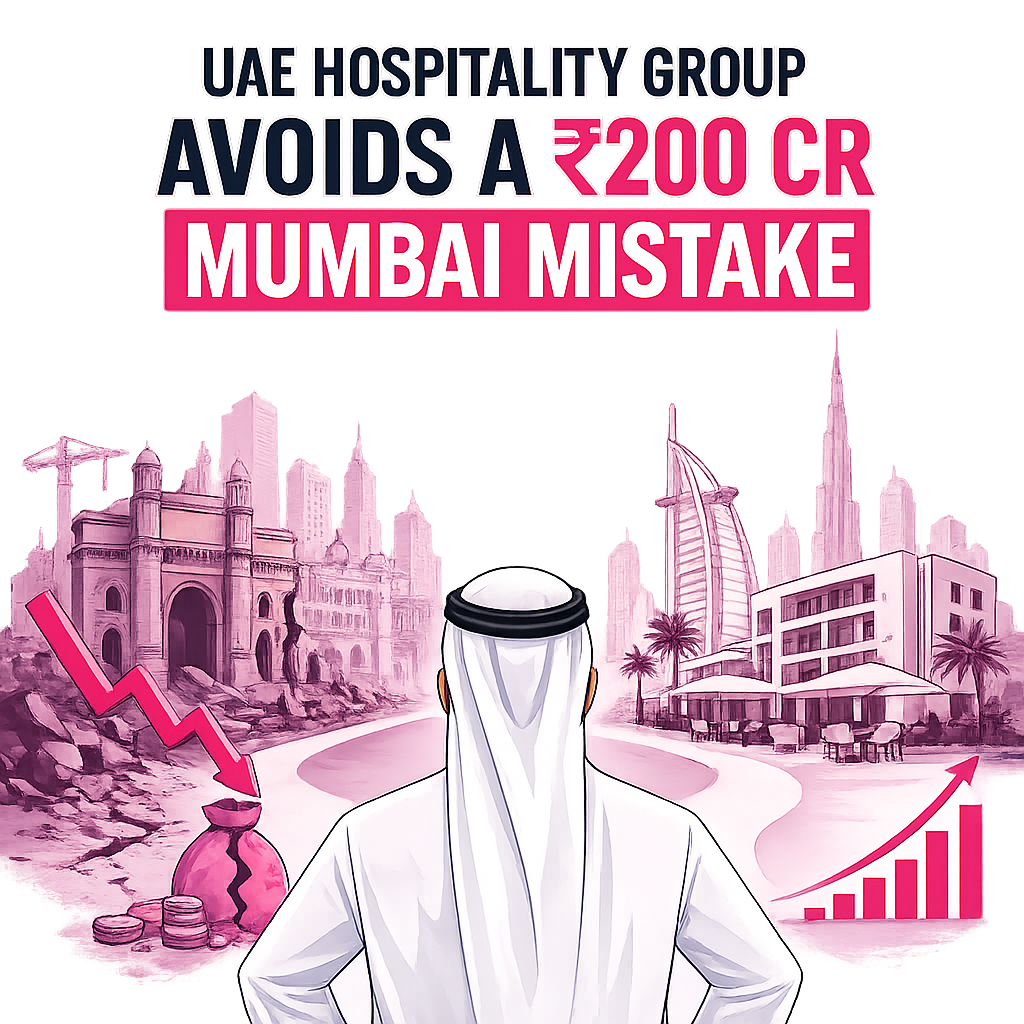

A UAE-based hospitality group was set to invest ₹200 crore in a premium Mumbai property, backed by strong market perception and luxury demand signals. However, a deeper, data-led analysis revealed high competitive saturation, pricing pressure, and limited differentiation potential.
Through city-level market research and competitive benchmarking, the strategy was reworked—identifying Bengaluru as a more favorable, high-growth market. This shift helped the group avoid a high-risk investment and redirect capital toward a more scalable and profitable expansion opportunity in India.
A Dubai-based 5-star hospitality group planned its entry into the Mumbai market with a premium property strategy, aiming to replicate its successful UAE positioning. The expansion was driven by high-level demand assumptions, without in-depth competitive benchmarking or localized validation. Despite strong indicators around luxury demand, the absence of hospitality market research in India limited visibility into real micro-market dynamics.
Mumbai’s luxury hospitality landscape is highly saturated, with sharp variations in pricing power, location performance, and customer segments. Without detailed luxury hotel India research, the group risked entering a crowded market with limited differentiation potential. The core challenge was not demand, but a lack of data-driven clarity—putting a ₹200 crore investment at significant risk.
Studio Forge conducted a comprehensive hospitality market research India study, combining city-level demand analysis with competitive benchmarking across Mumbai and Bengaluru. The approach included luxury hotel India research, evaluating supply saturation, pricing benchmarks, demand trends, and micro-market performance to identify true investment viability.
Rather than relying on Mumbai’s perceived market strength, the analysis revealed critical gaps in feasibility. Bengaluru, in contrast, showed stronger demand-supply balance, emerging premium corridors, and better alignment with the brand’s positioning. These insights enabled a strategic shift, forming a more robust UAE hotel India expansion roadmap based on data, not assumptions.
The study revealed that while Mumbai presented strong headline demand, its luxury hospitality segment was highly saturated, with intense competition, high entry costs, and limited room for differentiation. Entering this market would have led to significant capital inefficiencies and prolonged break-even timelines.
Based on these insights, the group avoided a ₹200 crore investment in a high-risk market and redirected capital toward Bengaluru, where demand-supply gaps and consumer growth trends created a more scalable opportunity. This shift strengthened the group’s UAE hotel India expansion strategy, aligning investment with high-growth micro-markets and improving long-term returns. Lets Connect to drive smarter, insight-led expansion decision Contact Studio Forge
A UAE hospitality group avoided a ₹200 crore Mumbai investment misstep after market research revealed high saturation and limited differentiation. A city-level competitive and demand analysis redirected expansion to Bengaluru, enabling stronger growth potential, better market alignment, and lower investment risk.